Nr.2 – 2024.05.02

The producer of old age is habit: the deathly process of doing the same thing in the same way at the same hour day after day, first from carelessness, then from inclination, at last from cowardice or inertia.
Habit is necessary; but it is the habit of having careless habits, of turning a trail into a rut, that must be incessantly fought against if one is to remain alive… one can remain alive long past the usual date of disintegration if one is unafraid of change, insatiable in intellectual curiosity, interested in big things, and happy in small ways.

Edith Wharton

Simplicity

At the sound of hooves: think horses, not zebras.

There is a thought and a mantra which I lately find myself coming back to over and over again, both at work and at home: when things get tough, when things start to pile up – keep things simple.

So often, the main task (not necessarily job) of the “adult in the room” is to keep the basics on track and ask the simple, fundamental questions.

That way, it becomes easier to drill down to the fundamentals (whether that applies to writing, photography, art, science, or life in general).

Awareness

  • Awareness, not thinking
  • An attitude of openness and curiosity, not judging
  • Flexibility of attention, not resisting

https://medium.com/personal-growth/how-to-see-yourself-clearly-skip-the-introspection-mode-c66bfb05c061

I’m trying harder to put the three bullet points above into practice, both at, and outside, work.

A photographic hobby helps to some degree: unless you’re out documenting something specific, or work as a photojournalist on assignment, I would think that the above traits are essential to getting started on a body of work that reveals something about what and how you see.

The post above puts the three points in the context of mindfulness and introspection, and how the latter can become a trap unless there is some distance there that “re-baselines” your sense of yourself. Perhaps a little dramatic at times (and themes do repeat themselves) but the essence is there: get some distance, compare how you see yourself and how others do, and above all else – engage in conversation and don’t spend so much time alone thinking. It’s the interactions that stimulate change, the (healthy) introspection which can then put it into context and direct it.

Where this becomes interesting is as this relates to work. Mindfulness in my private life, when I’m pursuing my hobbies, or when I’m thinking is one thing – being aware and empathetic in a work environment is something else entirely.

But then it’s not: it’s still listening (actively), putting yourself in someone else’s shoes (empathy), and ultimately generating that distance to what you are doing to better let you see whether a sprint is appropriate at this stage of a marathon, or whether it might be worth looking and feeling what is going on around you to aid the flow.

Related post:
http://leicaphilia.com/the-plain-sense-of-things/

My photography just is; the subject creates itself. I point the camera at things that make sense to me to photograph. Any needed rationalizations come later, at the point of editing, selecting, sequencing, articulating. What I’m left with defines what I’ve seen and how I’ve seen it.
 

Process

Here’s what I’m thinking about:

Another example of writing for purposes other than the grand finale is Austin Kleon’s blog. Author of the bestseller, Steal Like an Artist, Kleon writes and posts every day as a means of shaping his thinking. His smaller stuff evolves into bigger stuff. His raison d’etre is forced output as a means of refining his eye on the world and his ability to describe it.

https://33charts.com/writing-public-process-not-product/

This daily routine is what I’m currently getting used to: small steps, with individual pieces, but gradually I am starting to tick boxes in a consistent manner.

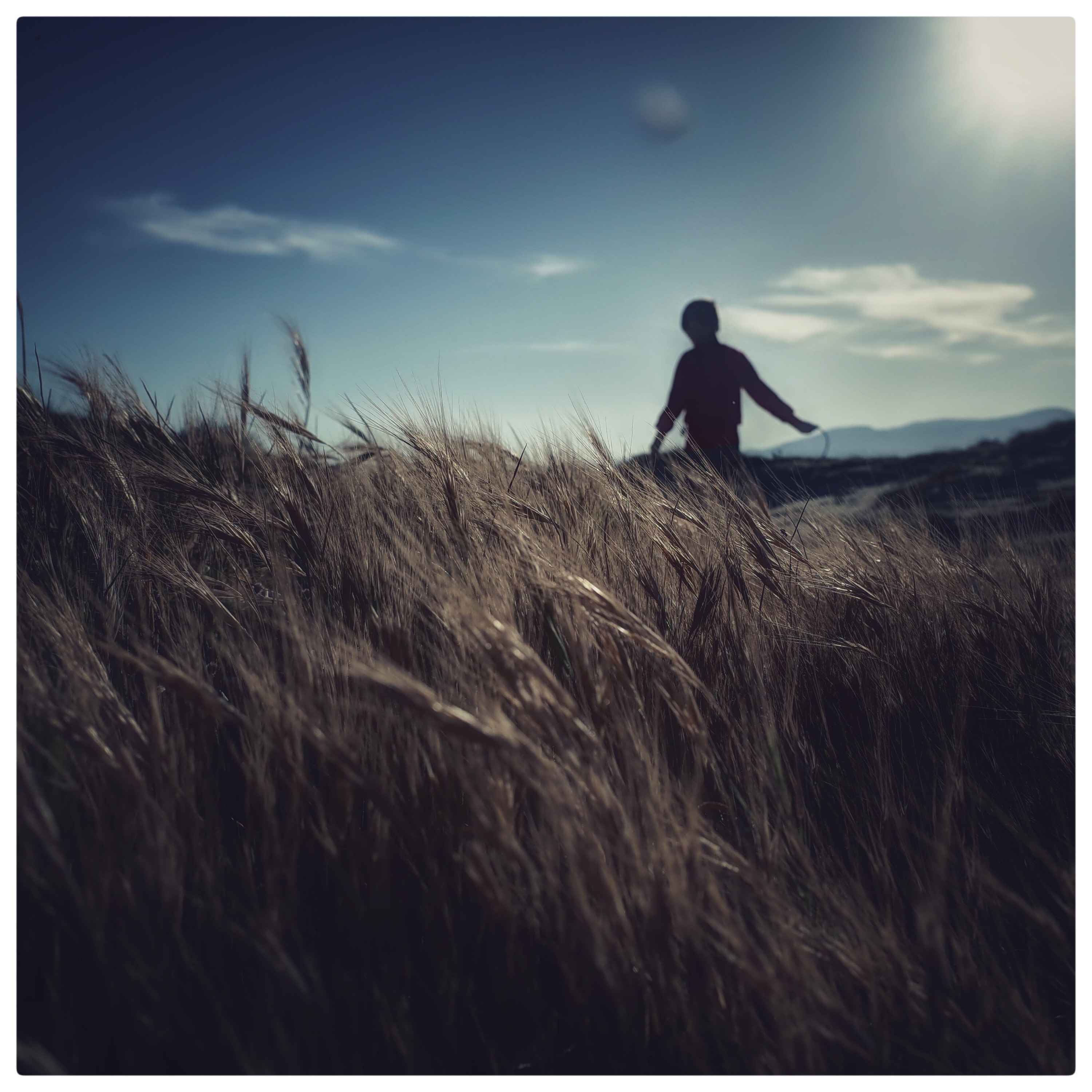
First focus is on the daily picture: so far I am almost on 100 without a missed day.

Next step will be my daily words and triggers, followed by exercise.

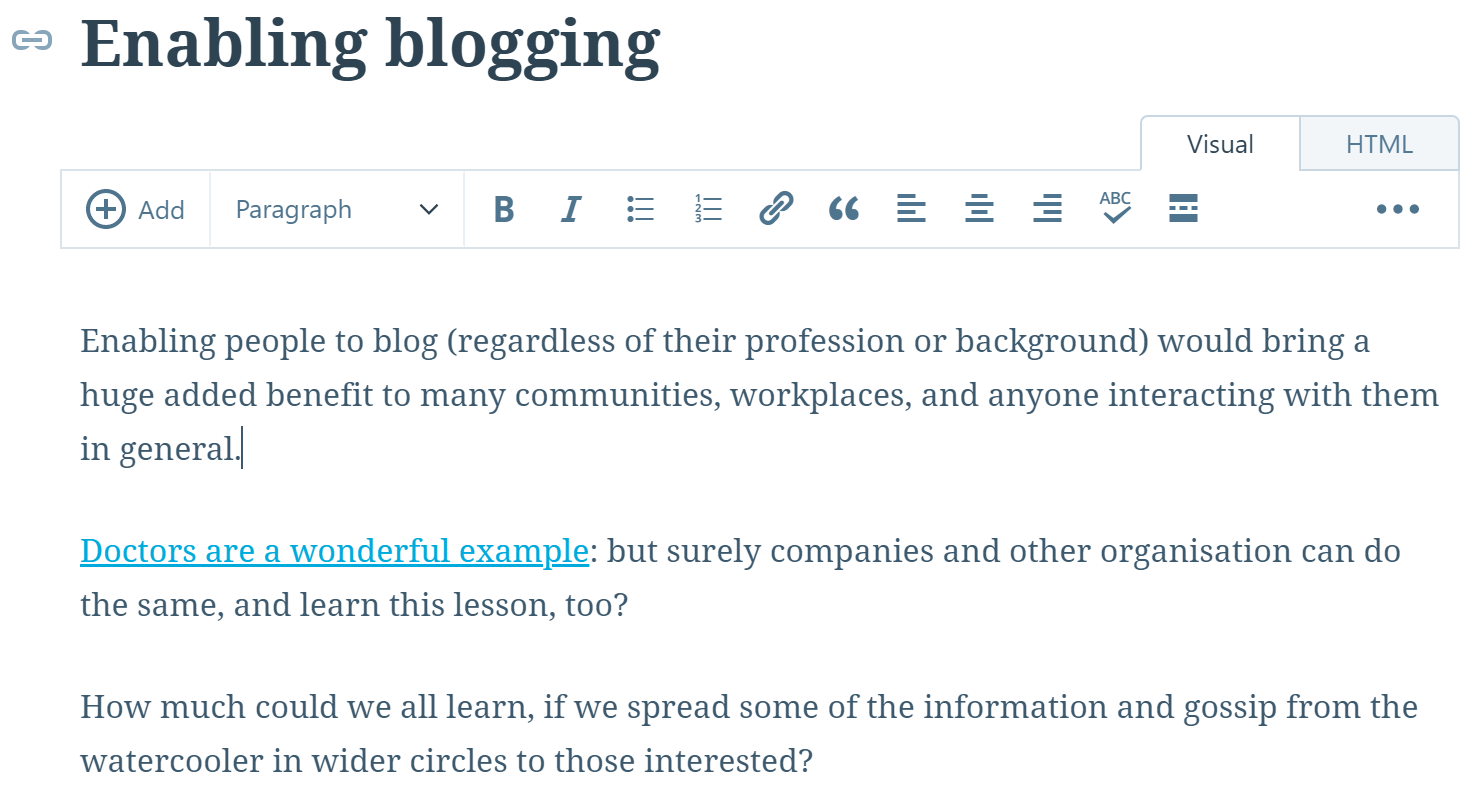
Blogging should follow swiftly: and once I manage to unify all of the above (perhaps not the exercise), there should start to be benefits from the cross-fertilisation.

Analogue

Everything analogue has become a kind of obsession: photographic prints, linocuts, books – tangible, simple, focused, without the need or possibility for any post-processing.

But adding a daily digital component (iPhone, Ricoh GR ii) also has a role: it forces the extraction of an image, composition, color, texture, mood, reflections, patterns, motifs. Daily practice which should make my film-exposing quicker, easier, more likely to end in keepers, and generally more enjoyable.

The ability to see can and needs to be practiced.

Today

Daily habits simply require a starting point. A day on which, rather than thinking about starting something, a first move is made.

My picture-a-day project has already gone through almost a sixth of a year: so far no missed days, and a few small things have even revealed themselves along the way.

Perhaps this can be expanded to other daily habits: it would certainly lay bare yet more triggers, and should shift the gears gradually towards a new routine.

MOOCs and Me

Once again a BBC Radio 4 podcast has sparked a long line of thinking and critical reflection, this time on the current phenomenon of MOOCs (Massive Open Online Courses) and their impact on education and all sorts of related topics (e.g., society, access to education, the value of education, etc.).

I have to admit that I don’t yet have a clear picture of how I would/should react to and interact with MOOCs, but the discussion and documentary certainly elicited a long series of questions, with different answers leading to further questions and a gradual fleshing-out of the overall picture that may at some point allow me to reach an internal equilibrium consensus:

What is the importance for me?

  • Can I supplement my current knowledge with additional courses (i.e., fields of interest outside my career specialisation, or job-related fields complementing what I do all day)?
  • Would it be time well-spent, or am I better off spending more time socialising as I am already using up my “available capacity” for facts and learning?
  • Where are my strengths and weaknesses, and how could an online course complement, compensate, or strengthen the one or other? Which leads to the old debate: work on your weaknesses to balance out the overall palette, or focus on your strengths, which requires far less effort and might achieve more in the short term?

What is the importance for my children?

  • What will be the impact on their education? Will education be a mixture of “school” learning and online help-yourself?
  • What will be the impact on travel for them? If you can do more by staying at home, is this what they will choose? What are the drivers of going abroad to learn something, or staying at home? Again, how do you balance the advantages and disadvantages (i.e., stay at home and spend the time not traveled wisely, compared to the thrill of traveling with intense periods of learning while standing still/resting in a particular place)?
  • How will it affect their ability to get a job? Will MOOC certificates and degrees be recognised (on paper), and how will companies test whether a candidate is a good fit (i.e., how will they assess knowledge, creativity, and ability to think)?
  • How would online learning affect their social skills, given that “social skills” in an online environment work very differently compared with in the offline world (someone from my generation probably grew up learning mainly offline social skills, while the current generation probably spends as much time working with other people online as off). How will future societies work in groups, and how will this affect group dynamics?
  • In particular the last point is one that concerns me: making friends and interacting with teachers strikes me as oh-so-valuable, and consequently also important for society, given that each teacher has a very particular way of teaching and influencing pupils.

What is the importance for society?

  • Will MOOCs reach out, enabling those who cannot attend the great bricks-and-mortar institutions to access their “library,” or do they somehow simply entrench those elements of the rich world, who already have spare time, greater access to a broad range of options, and a quick internet connection?

Overall, the more I read the more I am convinced that for people like me and my family the biggest store of value is creativity and the ability to generate (and concretise) ideas, as well as the development of social skills and the interaction with other people. MOOCs might support this in a multitude of ways, but as with so many things, the key lies in the balance, and I will be following this story as closely as I am able to see how things develop.